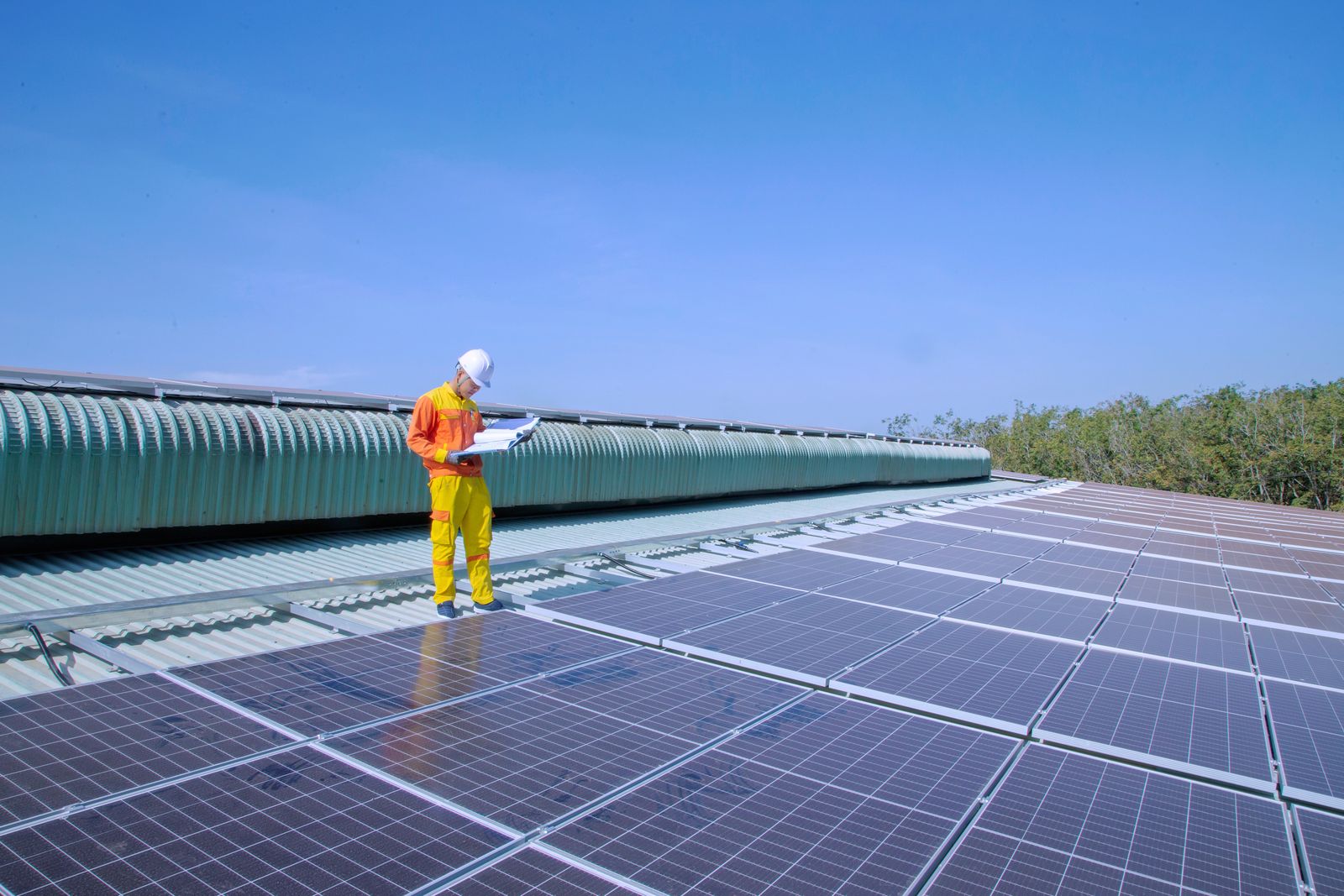
Solar panels and battery storage — your questions answered
Below are the questions Glasgow and surrounding-area homeowners most often ask us about adding solar panels and battery storage — from sizing and inverters to 0% VAT, finance, MCS certification and how the survey works. If your question is not here, call us or use the quote form and we will answer it directly.
Can I add a battery to my existing solar panels?
Yes. Adding a battery to an existing solar PV system is one of the most common enquiries we handle. We check your current inverter, your generation pattern and your usage, then specify a battery that integrates cleanly — either AC-coupled alongside your existing inverter, or by replacing it with a hybrid model if that is more cost-effective.
How do I know what size battery I need?
Battery sizing depends on your daily electricity use, when your peak demand falls, and what you want the battery to do — cover the evening, run a heat pump overnight, or charge an EV. Our survey looks at your usage and goals, then recommends a capacity. We do not quote sizes without seeing how you use power.
Do solar panels work well in Glasgow's climate?
Yes. Modern panels generate in diffuse and overcast light, not just direct sun, and Glasgow's long summer days produce strong generation. A battery is what makes solar particularly useful in Scotland: it stores daytime surplus for the evening and overnight, so less of your generation is exported.
What is a hybrid inverter and do I need one?
A hybrid inverter handles both solar generation and battery charging/discharging in a single unit. For a new system it is usually the cleanest choice. If you are adding a battery to existing solar, we assess whether your current inverter can be retained with an AC-coupled battery or whether a hybrid replacement makes more sense.
What is the difference between AC-coupled and DC-coupled batteries?
In a DC-coupled system, the battery charges directly from the panels' direct current before it is converted — slightly more efficient. In an AC-coupled system, the battery connects on the alternating-current side, which is simpler to add to an existing solar installation. We recommend the approach that best fits your setup.
Is there 0% VAT on solar and batteries?
Yes. 0% VAT applies to the supply and installation of solar panels and home battery storage until 31 March 2027. Your written quote reflects this — the price you see is the price you pay, with no VAT added.
Are finance options available?
Loans available, subject to status. Finance options can be discussed as part of your quote so you can spread the cost. We do not advertise specific loan amounts or terms here — your surveyor will cover the current options with you.
What does MCS-certified installation mean?
We install through MCS-certified partners. The Microgeneration Certification Scheme is the recognised quality standard for small-scale renewable installations in the UK, so your installation meets an established benchmark for safety and workmanship, and you receive an MCS certificate for your records.
Do I need planning permission for solar panels in Glasgow?
Most domestic solar installations in Scotland fall under permitted development and do not need planning permission, with some exceptions — for example, if you live in a conservation area or a listed building. Our survey flags any planning considerations specific to your property.
Will a battery let me use solar power during a power cut?
Some battery systems support backup or islanding mode that keeps essential circuits running during a grid outage, but not all do by default. If power resilience matters to you, tell us during the survey and we will specify a system that supports it.
How long does a solar battery last?
Modern home batteries typically come with a warranty of around 10 years and are designed for thousands of charge cycles. Performance gradually reduces over time, as with any battery, but a well-sized system remains useful well beyond its warranty period.
Can I charge my battery from cheap overnight electricity?
Yes, if you are on an agile or time-of-use tariff. Many batteries can charge from the grid during cheaper overnight hours and discharge during the evening peak, which can complement your solar generation through the darker winter months.
Is the survey really no-obligation?
Yes. The survey is a proper assessment of your home, not a sales visit. You receive a written quote afterwards and there is no pressure to proceed. If you decide not to go ahead, that is completely fine.
How do I get started?
Use the quote form on any page or call us on 0141 230 0198. Tell us your postcode and a little about what you are looking for, and we will arrange a no-obligation survey at a time that suits you.
Ready to explore solar with battery storage?
Arrange a no-obligation survey and quote. We'll assess your home, recommend the right system size, and answer your questions — with no pressure to proceed.